




Date:
Audience:
Topics:
Resource Type:

The term “a gift of time” is frequently used to describe Transitional Kindergarten (TK) and it tells us something important about the power of the grade. Families and educators attest to the tremendous impact the gift of the TK year has on children’s school readiness. A growing body of evidence from TK classrooms across California over the last several years suggests that there are common themes that make this gift of time successful. Designed specifically for the unique needs of our youngest Kindergarteners, successful TK includes integrated, differentiated, and culturally responsive instruction, and includes strong family engagement.
The newly revised California Preschool/Transitional Kindergarten Learning Foundations (PTKLF) were released this summer by the California Department of Education (CDE), Early Education Division (EED). The PTKLF describe the knowledge and skills that most children, ages three to five and a half, develop in a high-quality, early learning program. They are intended for use in Transitional Kindergarten, the California State Preschool Program, and other state-funded, federally-funded, and private preschool programs in California including school-based, center-based, and home-based settings.
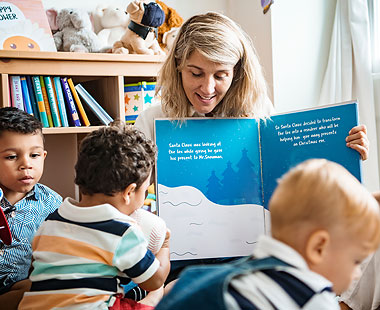
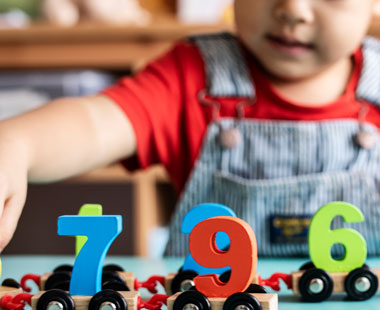
In the early years, children learn through hands-on experience and benefit from many opportunities for practice. They strive to make connections between all the new ideas and information they are learning. The most successful teachers make a deliberate effort to reinforce connections by explicitly relating topics and incorporating rich themes into their lesson plans. Throughout each day, TK teachers integrate math, language and literacy development, social-emotional skills, and English language development.
For example, TK teachers plan lessons that allow young children to:
In a successful TK classroom, teachers continually use observation and formative assessment to determine children’s progress along the continuum of skill development and tailor their instruction to help every child flourish. They use small groups, pairs, and individual activities to personalize their classroom program and build on whole-group experiences. To maximize learning for Dual Language Learners (DLLs), TK teachers skillfully employ English Language Development (ELD) instructional strategies. Additionally, this differentiated approach to instruction facilitates the successful inclusion of children with special needs in the TK classroom.
A vibrant TK classroom is busy with activities and conversations and filled with the excitement of small groups composed of children building similar skills together. The TK teacher purposefully designs the classroom to include accessible learning centers that cultivate curiosity and reflect the beauty, strength, and capacity of all children. The teacher also thoughtfully constructs activities so that each child is challenged at the right level to build success, persist through difficulty with little frustration, and get to the next level of skill.
For example, a successful TK teacher might ask all children to find pebbles on the playground. At the same time, in carefully composed small groups, they support one group of children to sort by color while another group adds and estimates. Meanwhile, they are helping build vocabulary, comprehension, and foster cooperation. In one group they might ask for children’s opinions about how to estimate with open-ended questions, and in another, they may ask children to share and describe pebbles.
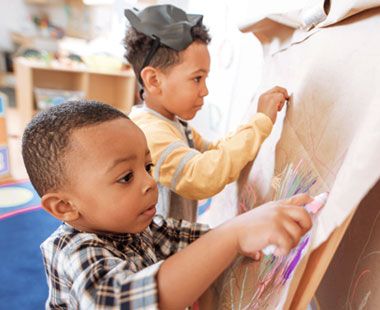
The TK teacher skillfully integrates children’s play into daily learning activities to support healthy cognitive, physical, social-emotional development.
“Play is important to healthy brain development. It is through play that children at a very early age engage and interact in the world around them.”
—The American Academy of Pediatrics, 2007


Successful TK classrooms support DLLs and are culturally and linguistically responsive to children from many cultures. Students thrive when teachers create a rich environment and support meaningful relationships that honor culture, ability, and home language.
Teachers should recognize that TK students who speak a language in addition to English and/or who are learning English are contributing positively to their own development and enriching the TK experience for other students. It is important for teachers to understand that DLL children demonstrate their knowledge in the language they are most comfortable in and might not have developed sufficient English language skills to feel confident to respond or fully participate.
Creating opportunities for children to participate through a variety of modes will help ensure knowledge remains accessible and the curriculum is responsive to all learners. Children’s responses should be valued and respected, regardless of the language they use when responding.
Teachers should work collaboratively with parents to develop specific plans and strategies that value and support the ongoing acquisition of skills and knowledge in English and the child’s home language. TK teachers can enhance this practice through systematic support of their students’ use of home language to learn English. The successful teacher will build strong relationships with and between children and provide positive learning experiences that maximize their success, build on their strengths and assets, and minimize the challenges and frustration some may experience during this time. Additionally, when children are provided with multiple opportunities to express opinions and describe their lives, each child feels valued for their unique contributions to the classroom community.

For additional resources and strategies for supporting DLLs in the classroom, please visit the Multilingual Learning Toolkit, an online hub for research-based key principles, instructional strategies, and associated, free, practical, and easy-to-use resources that are geared towards educators who teach PreK-3rd Multilingual Learners.